
Energy & Society · 3 July 2026 · New Energy
The Vatican aims for 100% renewable: lessons from the Popes' mega agrivoltaic project
With the Italy–Holy See agreement in force since May 2026, a ~100 MW agrivoltaic plant will rise at Santa Maria di Galeria: the Vatican could become the first state in the world powered entirely by renewables. A signal that speaks to businesses and families too.
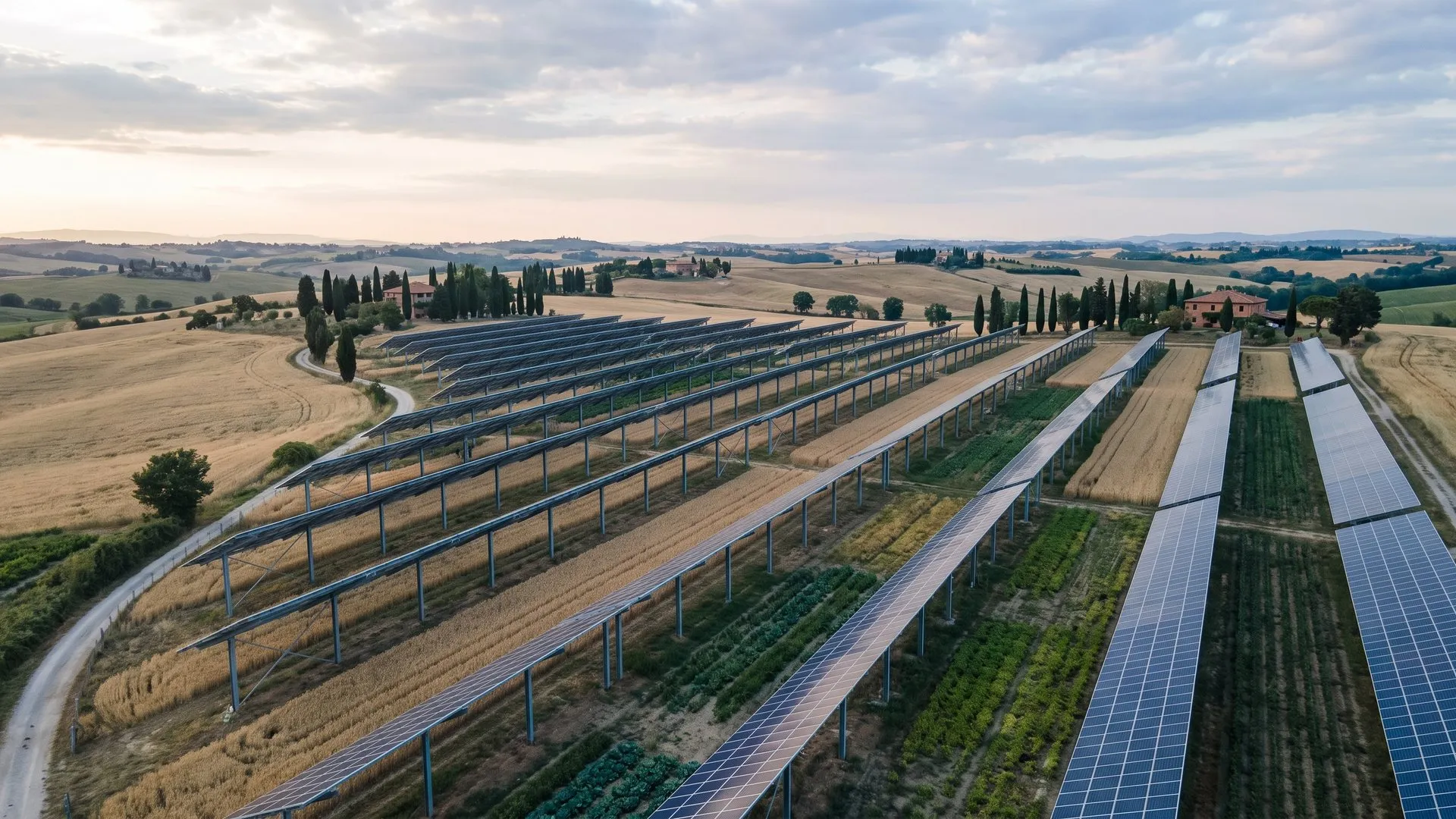
There is a building site on the outskirts of Rome worth more than many climate treaties: in the extraterritorial area of Santa Maria di Galeria — 430 hectares hosting Vatican Radio’s transmission antennas since 1957 — an agrivoltaic plant will rise, designed to cover the entire energy needs of the Vatican City State. If the project keeps its promises, the Vatican could become the first state in the world powered entirely by renewable sources.
From the “Fratello Sole” motu proprio to the agreement with Italy
The story begins on 26 June 2024, when Pope Francis signs the motu proprio Fratello Sole (“Brother Sun”): a document linking the Holy See’s energy transition to the principles of the Laudato si’ encyclical, and tasking APSA and the Governorate with building a system able to guarantee the “complete energy sustenance” of the Vatican State.
The project required a diplomatic step: the area is extraterritorial, so an agreement with Italy was needed. The Agreement between the Holy See and the Italian Republic was signed on 31 July 2025 at Palazzo Borromeo by Archbishop Paul Richard Gallagher and Ambassador Francesco Di Nitto, and formally entered into force on 27 May 2026.
Pope Leo XIV, who visited the area in June 2025 calling the project “a beautiful opportunity” and a “very important” example offered to the world, carried the plan forward by establishing the “Fratello Sole” Foundation in June 2026 — the body that will oversee construction and operation.
Why “agrivoltaic” rather than a plain solar field
The technical choice is the heart of the project. With an estimated capacity close to 100 MW, the plant will not sacrifice the agricultural use of the land: in agrivoltaic systems the panels are raised off the ground, allowing farming or grazing underneath the modules. The agreement with Italy explicitly commits to preserving the land’s agricultural use, its hydrogeological balance and its landscape heritage.
It’s the same approach growing on private land across Italy: producing energy without consuming soil, integrating agriculture and generation. Any surplus energy beyond the Vatican’s needs may even be made available to the surrounding territory.
What this story teaches businesses and families
Beyond its symbolic value, the Vatican project says three very concrete things:
- Energy independence is an achievable goal, even for an entire community: you start from real consumption and size production accordingly.
- Agrivoltaics has come of age: for landowners and investors it is now a concrete way to earn from land without giving up farming — exactly the kind of project New Energy develops through its Utility-Scale & Solar Farms service.
- Sustainability is a matter of vision before technology: once the direction is clear, the tools already exist.
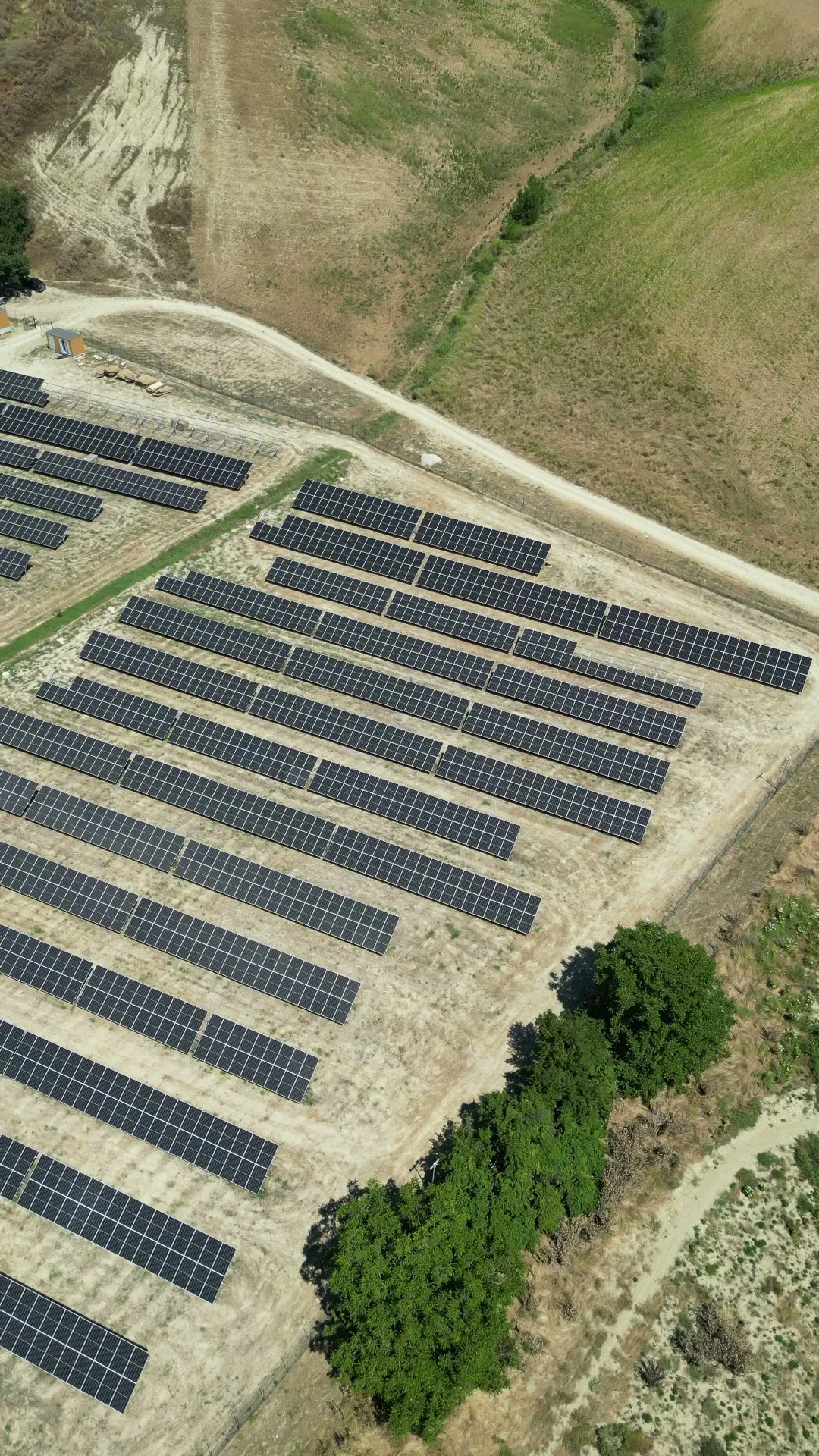
What about your land? Your company?
You don’t need to be a state to think like one: consumption analysis, right-sized production, progressive independence. It’s the method we apply at every scale — from a home roof to a solar farm.
If you own land, run an energy-intensive business or simply pay bills that are too high, let’s talk: toll-free 800 168632, free consultation.
Sources: Vatican News, “In vigore l’Accordo tra Santa Sede e Italia per un impianto agrivoltaico” (28 May 2026); L’Espresso, “Il Vaticano a energia solare” (24 June 2026).